


Casa da Mariquinhas was founded in 1968 by Heitor Gil Vilhena, a city personality known not only for his business side, but also for his acting activity. Ten years ago it was acquired by the son of one of the singers who actually performed here, under the stage name Fanny Ramos. This place exudes fado through the pores of its granite walls. All the great names of national fado have passed through here and continue, which, without microphones and in an atmosphere of intimacy and proximity to the public, make Casa da Mariquinhas the ideal place to enjoy the best fado that is sung and touch this city. Unique experience accompanied by the best traditional Portuguese cuisine.

The famous Casa Crocodilo has been open in the center of Porto since 1948. This establishment works with soles and uppers, striving for the quality of its services. Apart from the private client looking for this house for its excellent arrangements, Casa Crocodilo also offers many other solutions within its sector. To the surprise and amazement of those who visit the space, a 5 meter embalmed crocodile is suspended on the ceiling. Brought from Brazil, it has been part of Casa Crocodilo’s history since its opening, having become its symbol and reason for its name.

Casa Coração de Jesus (House Heart of Jesus) has existed since 1885 and has been in the same family for four generations. Its specialty is religious articles, both for celebrations and for procession rituals, focusing on the quality of their products. It began to devote himself to religious embroidery, but had to reinvent himself after the Second Vatican Council, which eventually reduced the demand for such articles. The building where it is located was built with the purpose of being a bank house, hence its iron door and the safe that come from that time. The store features eye-catching architecture with carved ceilings, stained glass and a facade that makes it unique.
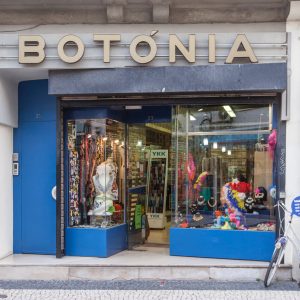
Founded in 1936, Casa Botónia is an emblematic haberdashery whose main attraction is its buttons. In fact, here you will find all sorts of buttons of various colors and materials, from the simplest to the most precious, most of which are imported from France and Italy. We highlight the mother-of-pearl buttons, one of the strengths of Botonia. The huge variety of buttons that can be found here attract from amateur couturiers to renowned designers, who find raw material for their collections here. Its unique and genuine ambience, with its button-lined walls and jewelery, is more than enough to warrant a visit to this historic shop.

Farmácia Lemos is a historic pharmacy, one of the oldest in the city. It was founded in 1780 and, from that time until 1801, belonged to the Carmelite Friars of Carmo, having gone through various managements to this day. It is distinguished by the technical competence of its professionals, diversity and versatility of the products and services that it makes available to its customers. Its facilities are modern and dynamic, while investing in quality and friendliness in its service.
In addition to the sale of medicines, Farmácia Lemos works in the areas of laboratory, orthopedics and perfumery, providing services such as weight and BMI determination, blood pressure measurement, total cholesterol and blood glucose, pregnancy tests, administration of vaccines and injectables, among other solutions.

Founded in 1934 and keeping its tradition to this day, Lopo Xavier is dedicated to reselling haberdashery, yarn and fabric.
The wool of this establishment, which has three private labels, arises from historical circumstances: the blockade of imports during World War II forced the production of domestic wool, having characteristics and manufacturing processes identical to those of the Shetland Islands.
Lopo Xavier is an establishment full of history, both in the space that houses the business and the products that it sells.
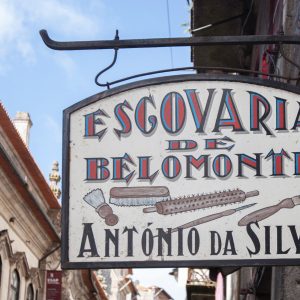
This shop and factory has been working since 1927 and has always been a family business. It’s also currently in charge, of its destinations, the fourth generation of it. Specializing in the manufacture of industrial, domestic and personal brushes, it is the only one with manual manufacture of them all over the Iberian Peninsula.
Here you will find a range of brushes designed for various and specific uses, such as shoe brushes and suits, as well as brushes for your beard.
Escovaria de Belmonte, almost centenary in its activity, offers customized solutions for all needs, complementing its production with the offer of repair service.
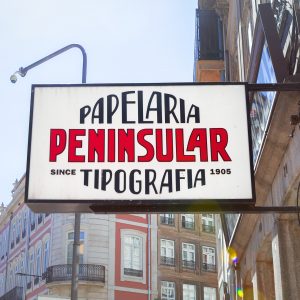
Peninsular is one of the most emblematic establishments in the city, serving its clients for over 100 years and selling the most varied stationery and graphic arts. Located in a century-old building, it started as a family business and today it remains so, now in the 5th generation. It is a constant process of modernization, always accompanied by rigor and thoughtfulness, synonymous with responsibility and commitment to sustained and solid growth over the years, but without forgetting the roots and the concern to preserve the essence of a century-old house. This is the simple yet effective formula that has allowed Peninsular to continue to be part of its customers’ lives for so many decades.

Barbearia Tinoco is already in the 1930s almanac in its current location, where it is referred to as the property of Manuel Fernandes Tinoco. The decoration of this barber shop is part of the city’s heritage. Noteworthy are the marble washbasins, the floor covered with fan mosaics, the iron chairs and the huge mirrors, in a set with strong Art Deco inspiration. Not to mention the old steam towel warmer, which was then placed on the customers’ faces, as well as the small marble counters in front of each chair that also served to set trays with the snack served from a neighborhood café.
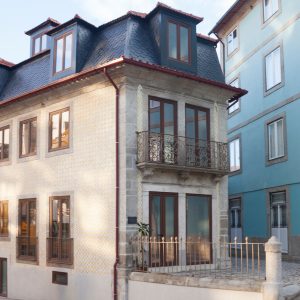
This is the first frame workshop in the city. It was founded in 1858 by two brothers, António and José dos Santos and the business is still in the family. The art of gilding and silvering with gold or silver leaf is an endangered art, but not here, where we value this craft, using traditional techniques and materials to reproduce classic objects, but also creating unique and contemporary objects. Throughout its existence, several artists created models of frames or margins, such as António Carneiro, Henrique Medina and Fernando Lanhas. The awards include the Bronze Medal at the 1900 Paris Universal Exposition and the Gold Medal at the Portuguese Industrial Exhibition in 1933.
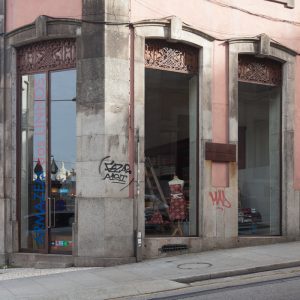
Armazém dos Linhos was born in 1905 and has been dedicated since the 1950’s to the production of printed fabrics with traditional Portuguese designs. In 2011 this space was in danger of closing doors, which was the ideal opportunity for the new owners, Filipa and Leonor Pinto Basto, to rewrite the fate of this traditional company.
The main idea of the project is to recover the patterns of Alcobaça cheetahs by reproducing old patterns and looking for new and contemporary applications for these fabrics.
Armazém dos Linhos also offers a range of national linen and fabrics, as well as its own brand, with a collection of bags, wallets and kitchen, table and home lines.

Created in 1898, Armazéns Cunhas is housed in a magnificent Art Deco building by Architect Manuel Marques and his associates Amoroso Lopes and Coelho Freitas. It results from the combination of three 19th century buildings in a single Art Deco façade. It is easily recognized by the open feather peacock on the building’s facade. Armazéns Cunhas specialize in household items such as bedspreads, tablecloths, bed and bath sets and blankets, men’s and women’s interiors. They also offer a wide range of white coats, maid’s coats and school coats. The furniture is original making the visit to this store an extraordinary trip to the past.